


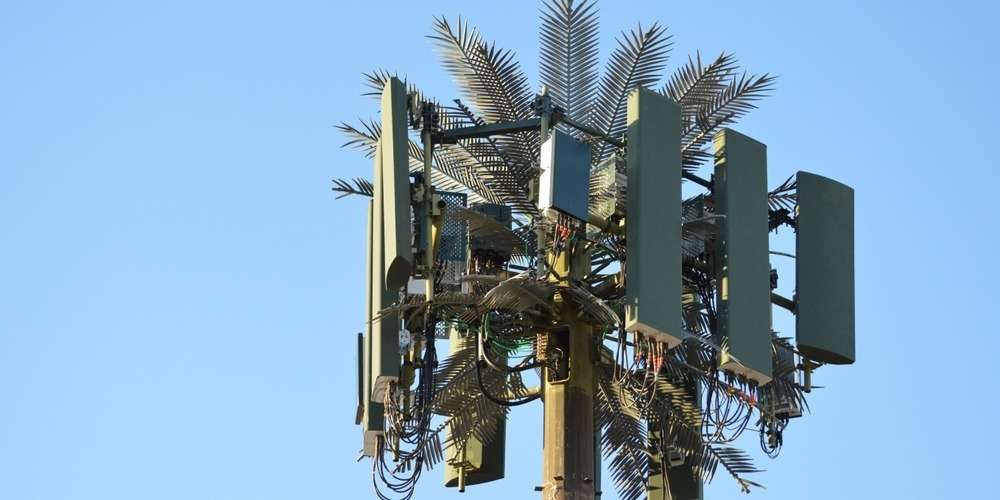
As our reliance on smartphones soared in the past couple of decades, cellphone towers sprouted up like digital daisies, dotting landscapes worldwide. We may be addicted to our phones, but most of us aren’t pleased by the sight of these ugly towers. As a result, companies have had to creatively disguise 5G towers in order to protect them from conspiracy theorists and make them less intrusive. It’s a noble goal, but it often ends up backfiring. Trying to make the tower blend in only makes it more obvious. An obviously fake tree is one thing, but the following disguises are pretty egregious!
Barren Tree — Hundon Haverhill, UK
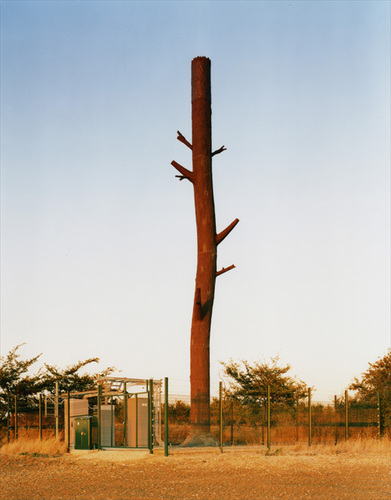
When opting to disguise a tower as a tree, designers usually choose one that's not known for seasonal changes. It’s why pines and palms are popular picks. But the people behind this tower took the opposite approach — the fact that the tree has no greenery at all makes it stick out during the warmer seasons. The rounded top feels unnatural, and the chain-link fence surrounding it simply screams, “I'm not a real tree!”
Cactus — Arizona
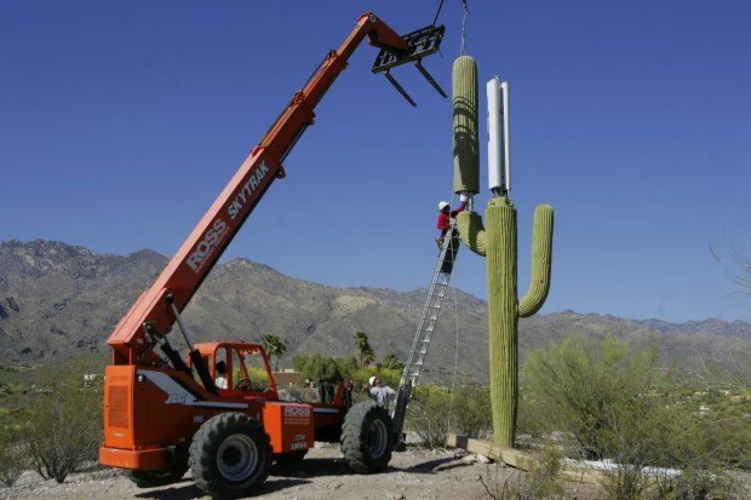
After trees, cacti are possibly the most common plant used to disguise 5G towers. It’s not a bad idea by any means. Unfortunately, this example from Arizona doesn’t pass the test, as there are no other cactuses around to allow it to blend in properly. That said, it’s still an interesting sight. Very rarely do you actually see people working on 5G towers, let alone working on the facade! Perhaps that could do a bit to discourage some of the more outlandish conspiracy theories.
Bison — Colorado
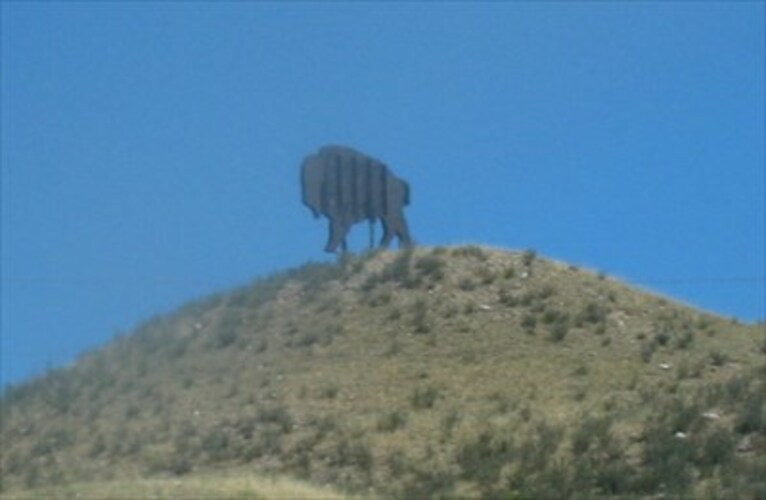
Nature is a common theme for 5G tower camouflage. However, there’s a reason most opt to use flora rather than fauna. This image shows a standee in the shape of a bison (or buffalo, depending on where you’re from). While wild bison are indeed native to Colorado, the result is noticeably uncanny. The design is flat and stationary. The front legs are visibly above the ground, with the poles holding the tower up plain to see. It’s also more than ironic, considering the impact 5G and cloud data have on the environment. Still, points for originality.
Crosses — Mesa, Arizona
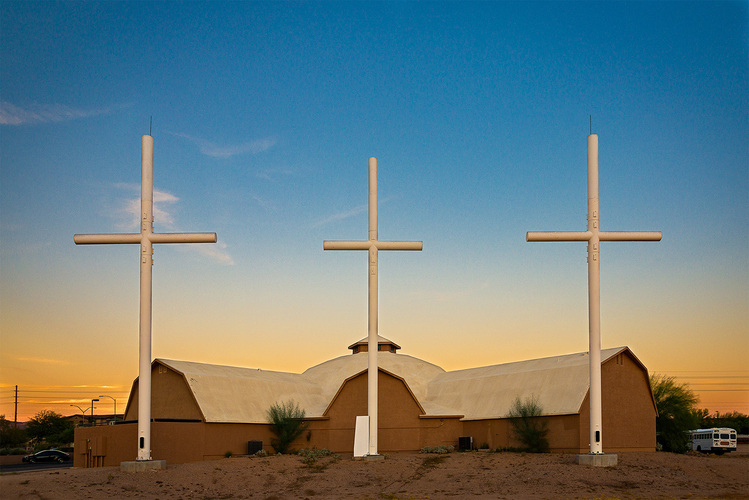
You may not immediately clock these three crosses as cell towers. They could easily be mistaken for church monuments beside the church building. The fusion of religious symbolism with modern technology feels surreal, almost otherworldly. In a word: odd!
Flagpole — College Station, Texas
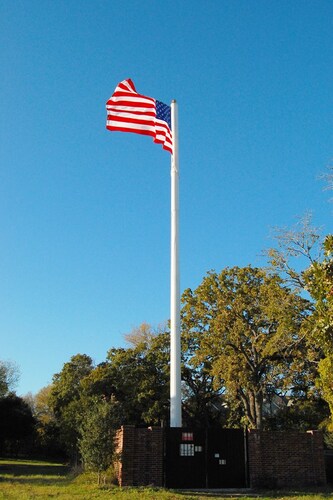
A flagpole is an unusual place to hide a cell tower! Credit where credit is due, though: This is a trickier disguise than some of the others on this list. Of course, it may be tougher to pull off in areas where cell towers have to be much taller to get the job done.
Brick Facade — Sopot, Poland
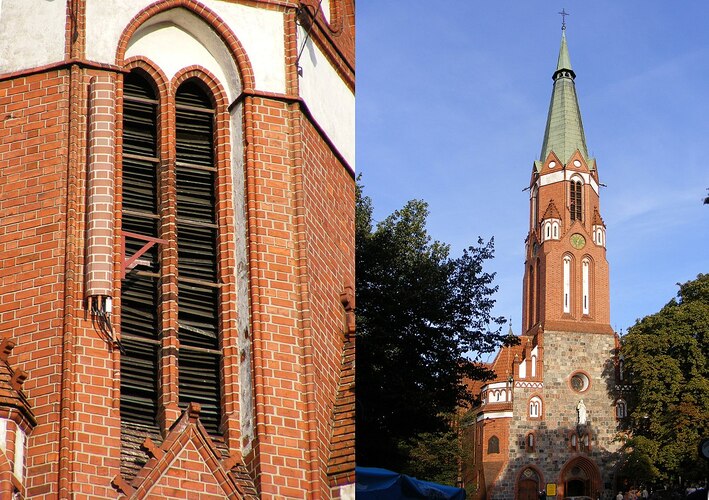
This example isn’t necessarily baffling at first. It’s a very effective attempt at camouflage, and even the close-up view of the tower doesn’t make it obvious. From a distance, it’s impossible to tell anything has been attached. Even if someone notices the discrepancy, they may assume it's repaired brickwork. Ultimately, that’s what makes this 5G tower stick out — the fact that, to the untrained eye, it doesn’t.
Chimney — Ogden, Utah
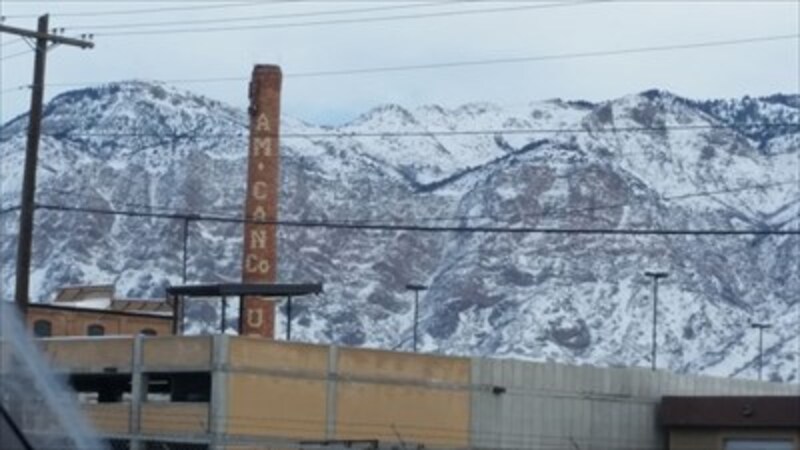
Bricks are an unsurprising alternative to trees for 5G tower espionage. They’re a common building material that blends well with their surroundings. It just so happens that this old canning company had a chimney that’s the perfect height for a 5G tower. It’s also a curious relic from a distant past. Eyewitnesses describe the equipment as having a brick pattern overlaid on it. It’s a solid example of reusing existing architecture for modern uses. Chimneys still in use, however, are unlikely to receive the same treatment, as the smoke they emit is sure to mess with the electronics.
Water Tower — North Park, San Diego

Water towers are particularly deceptive. They can be found in cities all across the world and are a good sign that you live in a high-quality neighborhood. That’s why AT&T opted to use one as a disguise. The problem? AT&T announced the opening of the 5G tower and shared the story with a local news station. The company even went so far as to host a ribbon-cutting ceremony. No doubt this was to boost publicity and showcase AT&T’s new technology. However, when you’re trying to hide something in plain sight, publicly announcing its construction counter to the objective.
‘The Bird’ — Düsseldorf, Germany

It’s unclear if Deutsche Telekom’s “The Bird” design ever left the prototype stage. Regardless, the design is so noteworthy that it needed to be featured on this list. It appears to be a work of modern art rather than something meant to blend into everyday life. It might not even be fair to consider it a disguised tower. Hopefully, if “The Bird” were ever properly installed, its cuteness and unique design would deter any would-be vandals.
The “Frankenpine” — Found All Over the U.S.
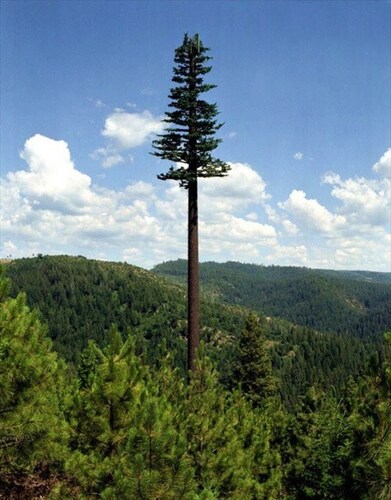
This list wouldn’t be complete without a good, old-fashioned “frankenpine.” The classic choice for cell tower disguises is also arguably the ugliest. Do they really think these ridiculously oversized fake trees are fooling us?