

- Wired internet connections like fiber and cable are best for streaming over wireless connections.
- A 300–500 Mbps internet plan is sufficient for a household with multiple streamers.
- Popular streaming services like Netflix and Disney+ vary in speed requirements for SD, HD, and 4K UHD.
Streaming has become the go-to method for consuming entertainment, but a streaming service is only as good as the internet service that supports it. Without a reliable and speedy internet connection, you won’t be able to enjoy services such as Netflix, Disney+, or Amazon Prime Video. Not all internet connections are created equal, so how do you know which one is best for streaming? Let's break down how to find the best internet for streaming to keep your binge-watching sessions buffer-free.
What Is a Good Internet Speed for Streaming?
A good internet speed for streaming depends on the video quality you prefer. For standard definition (SD), you’ll need at least 3 Mbps, while high definition (HD) requires around 5–10 Mbps. If you’re streaming in 4K ultra-high definition (UHD), you’ll want at least 25 Mbps for a smooth experience.
When talking about internet speed, it helps to know the difference between download and upload speeds. Download speed is how quickly you can stream videos, browse the web, or download files, while upload speed is how fast you can send data (such as live streaming or video calls). For most streaming needs, download speed is the priority. When internet service providers (ISPs) advertise their plan speeds, you're looking at download speed rather than upload.
Internet Speeds Required for Popular Streaming Services
Your favorite streaming services vary slightly in the speeds required for each viewing experience. Here's what you'll need on popular streamers.
Streaming Service | SD (480p) | HD (720p–1080p) | 4K UHD (2160p) |
|---|---|---|---|
Amazon Prime Video | 1 Mbps | 5 Mbps | 15 Mbps |
Apple TV Plus | N/A | 5 Mbps | 25 Mbps |
Disney+ | N/A | 5 Mbps | 25 Mbps |
Fubo TV | 3 Mbps | 10 Mbps | 25 Mbps |
Hulu | 2 Mbps | 6 Mbps | 16 Mbps |
Hulu Plus Live TV | N/A | 8 Mbps | 16 Mbps |
HBO Max | N/A | 5 Mbps | 50 Mbps |
Netflix | 3 Mbps | 5 Mbps | 25 Mbps |
Paramount+ | 2 Mbps | 5 Mbps | 25 Mbps |
Peacock | 3 Mbps | 8 Mbps | 25 Mbps |
Philo | 3 Mbps | 7 Mbps | 13 Mbps |
Sling TV | 3 Mbps | 5 Mbps | 25 Mbps |
YouTube TV | 3 Mbps | 13 Mbps | 25 Mbps |
What Are the Best Types of Internet for Streaming?
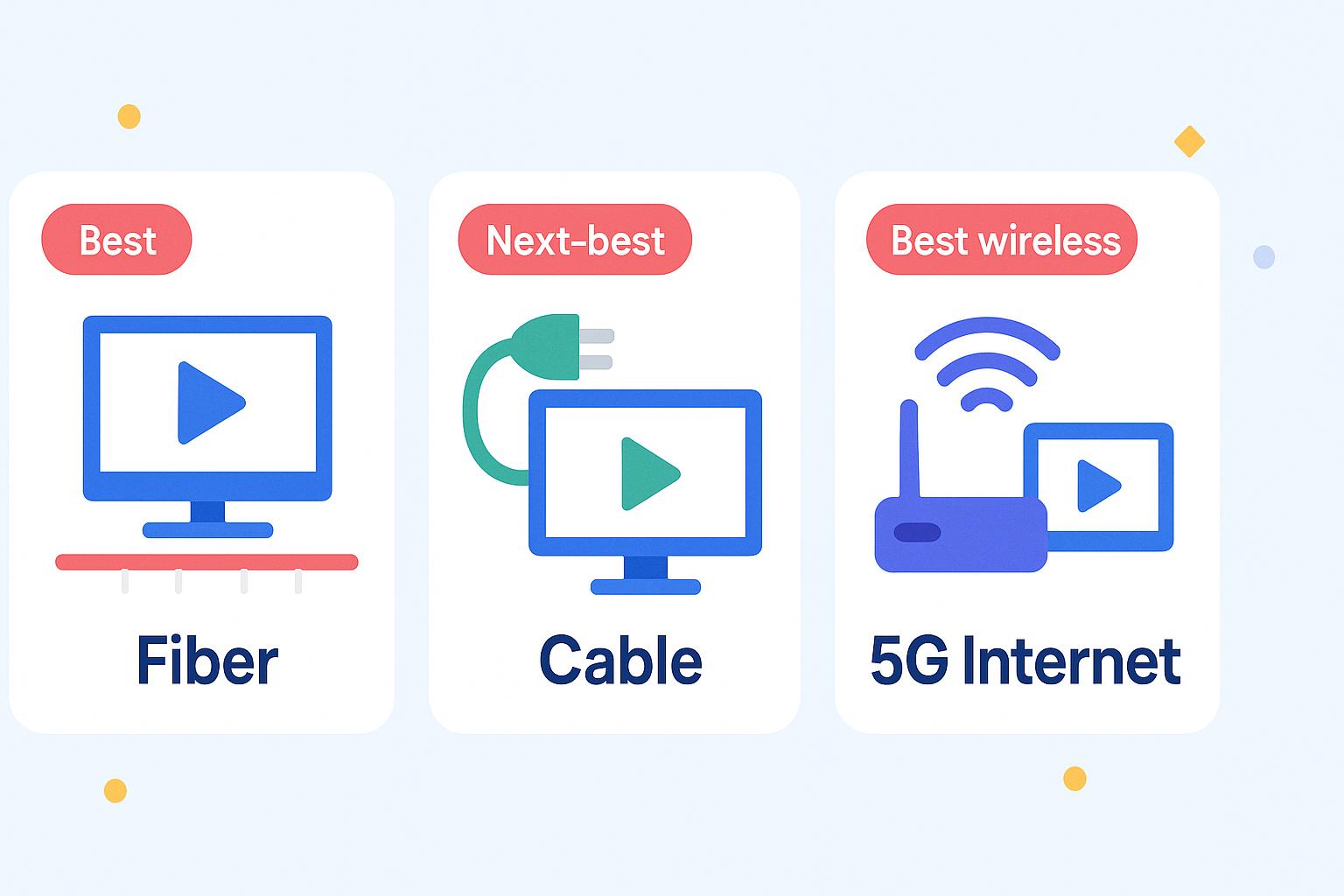
A reliable internet connection when streaming reduces lag and buffering, with wired connections outperforming wireless ones. Let's take a look at the best internet options for the most enjoyable streaming experience.
The Best Type of Internet for Streaming: Fiber
Fiber internet is hands down the best option for streaming thanks to its unmatched speed, reliability, and consistency. Unlike traditional copper-based connections, fiber-optic cables transmit data using light signals, resulting in significantly faster speeds and minimal latency (lag). That means a smoother streaming experience with less buffering and crystal-clear video quality, even during peak usage times. You can also stream 4K UHD on multiple devices at once without buffering.
Fiber internet has symmetrical upload and download speeds, which means upload speeds are just as quick as download speeds. (That’s not typical of other connection types, which usually have relatively slow upload speeds.) Does that matter for streaming? The short answer is, not really. It’s more relevant to video chatting and other activities that involve your computer sending data, rather than receiving it.
Below are some of the top fiber providers in the United States. Fiber availability isn't as widespread as other wired internet providers, but this type of connection is slowly becoming more available nationwide. Use the ZIP code check on InMyArea.com’s homepage to find fiber providers in your area.
Fiber Provider | Max Download Speeds | Starting Price |
|---|---|---|
5 Gbps | $55 per month | |
2 Gbps | $70 per month | |
2 Gbps | $49.99 per month |
The Next-Best Type of Internet for Streaming: Cable
If fiber isn't available in your area, cable internet is the next best thing. It’s not as fast as a fiber optic connection, but cable internet still provides ample bandwidth to support high-definition streaming on multiple devices simultaneously. Cable internet uses coaxial cables to deliver internet signals, offering reliable connectivity and consistent performance in most areas.
With widespread availability, cable delivers fast speeds and boasts reliability, but the connection is prone to network congestion and slowdowns during peak hours. Still, cable internet is more than capable of handling 4K streaming and simultaneous streams. Just make sure you get an internet plan with enough data to suit your needs, or go for an unlimited data plan or provider.
Cable Provider | Max Download Speeds | Starting Price |
|---|---|---|
2 Gbps | $30 per month | |
1 Gbps | $30 per month | |
2 Gbps | $30 per month |
The Best Wireless Internet Option for Streaming: 5G Internet
5G home internet is a strong wireless alternative to fiber or cable. This wireless internet uses cellular networks to connect a home router, providing a broadband connection without traditional cables or fiber lines.
It offers faster speeds than traditional DSL and is more reliable than satellite internet, making it a good option for streaming. However, speeds can vary based on location and network congestion. If you can get a stable connection, you may be able to stream in 4K UHD, but it may not be feasible if you have a large household streaming simultaneously.
5G Home Internet Provider | Max Download Speeds | Starting Price |
|---|---|---|
300 Mbps | $60 per month | |
415 Mbps | $50 per month | |
1,000 Mbps (1 Gbps) | $50 per month |
How to Choose Your Internet Plan's Speed
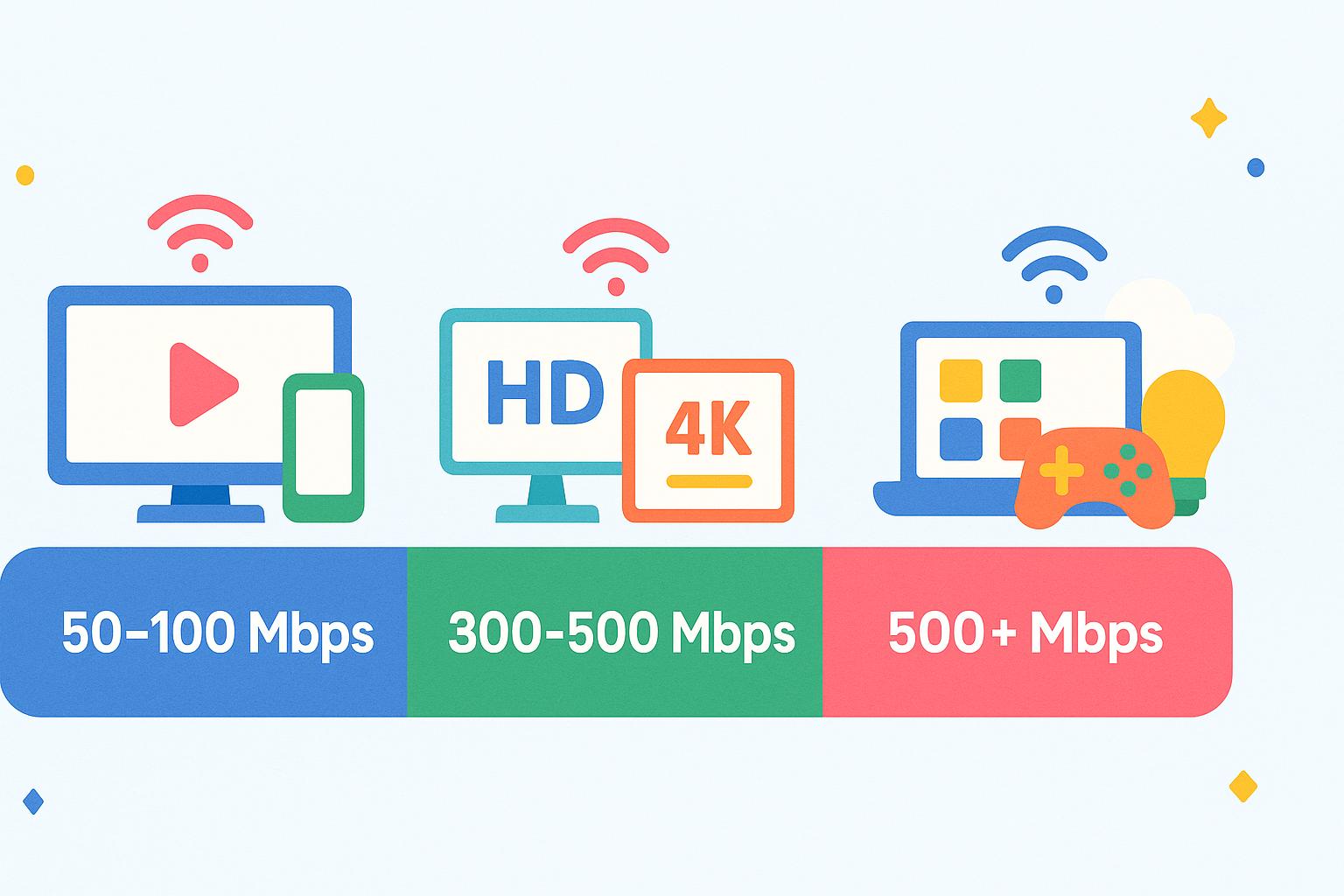
The biggest thing you need to consider when choosing an internet plan is how many devices are streaming simultaneously. You need a speed that can keep up with everyone in the household. A 50–100 Mbps plan should be enough if you live alone and only stream occasionally. However, for households with multiple streamers watching in HD or 4K, you'll need at least 300–500 Mbps to ensure a smooth experience. If you work from home, play online games, or have smart home devices, consider even faster plans to meet bandwidth needs.
Frequently Asked Questions About Internet for Streaming
How do I know if my internet is good for streaming?
Run an internet speed test using a free third-party tool online. If your download speed matches or exceeds the recommended speeds for your streaming service and video quality, you're good to go. If you experience buffering, lag, or drops in quality, your internet may not be fast enough or might need troubleshooting.
What is a good internet speed for homes?
A good internet speed for a household depends on the number of users and activities. For a single person, 100 Mbps is sufficient for general streaming and browsing. A family with multiple devices streaming in HD or 4K should aim for at least 300–500 Mbps to prevent slowdowns.
Does faster internet improve TV quality?
Yes and no. Faster internet helps maintain a stable connection and prevents buffering, but your TV’s display quality is still dependent on its resolution and settings. If your internet speed is too slow, your streaming service may lower video quality to avoid interruptions.
Do you need the internet to stream?
Yes, streaming requires an internet connection to access content from services like Netflix, Disney+, and YouTube. However, some services allow you to download movies and shows in advance, so you can watch offline without an internet connection.
Is Wi-Fi or Ethernet better for streaming?
Ethernet is better for streaming because it provides a direct, stable connection with lower latency and fewer interruptions. Wi-Fi can be convenient, but it’s more prone to interference and slower speeds, especially if multiple devices are connected. If you prefer using Wi-Fi, choosing the best router placement can help establish a stronger connection.